
Managing Frying Oil: How Do We Know When to Change It?
Frying oil management is a critical yet frequently overlooked risk in the professional kitchen. While many chefs are trained to rely on their senses—smell, sight, and taste—knowing the exact moment to change deep frying oil requires an understanding of chemical degradation. Using oil past its safe limit is not just a quality issue; it is a food safety concern.
2.0 The Facts on Oil Degradation
Frying oils undergo complex chemical changes during heating, exposure to light, and storage. These processes lead to the oil breaking down into toxic chemical substances. The rate of this breakdown depends heavily on the type of oil used. Generally, oils high in unsaturated fats, such as Sunflower, Canola, and Soy, degrade much faster than Olive or Palm oils.
As oil degrades, it forms polar compounds and Free Fatty Acids (FFA). This breakdown is accelerated by three main factors:
- Time: How long the oil has been held at high temperatures.
- Temperature: Keeping fryers at a constant high heat even during quiet periods.
- Moisture & Debris: Water from frozen foods and loose crumbs/batter facilitate hydrolysis.
3.0 Visual and Sensory Signs of Breakdown
Before reaching for a test kit, kitchen staff should be alert to these classic indicators that the oil is nearing the end of its life:
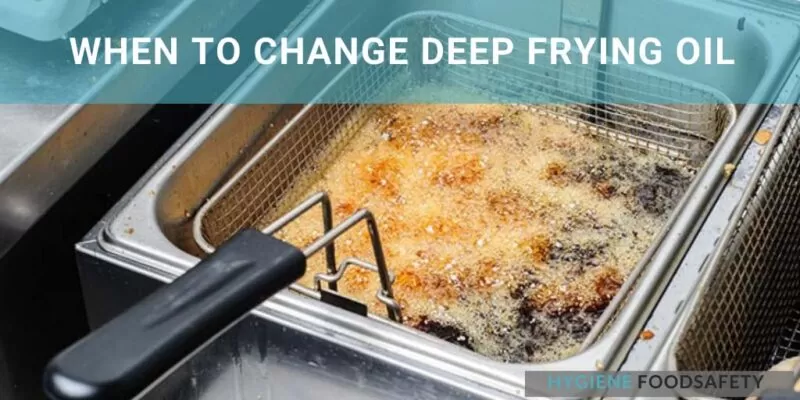
- Colour: A significant darkening or “tea-like” appearance.
- Smell: A rancid, “off,” or soapy aroma.
- Texture: A noticeable thickening or increased viscosity of the oil.
- Smoke Point: The oil begins to smoke at lower temperatures than usual.
- Foaming: Excess bubbles that do not dissipate quickly during frying.
While sensory checks are important, they are subjective. An FFA (Free Fatty Acid) level of 2–5% is generally acceptable, but once levels exceed 6%, the potential for toxicity increases significantly. Use an oil test strip or a TPM (Total Polar Material) meter daily to get an objective reading. This saves money by preventing premature disposal while ensuring the safety of your food.
4.0 Measuring Quality: FFA vs TPM
To maintain HFS standards, you should use one of two professional methods for measuring oil quality:
- Oil Test Strips (FFA): These strips change colour based on the acidity of the oil. They are cost-effective and provide a quick visual guide to replacement needs.
- Oil Test Meters (TPM): These electronic devices measure “Total Polar Materials.” They are highly accurate and allow for precise tracking of oil health over time.
5.0 Extending Oil Longevity
Oil is a significant cost in the kitchen, but it does not require discarding after a single use if cared for correctly. Daily filtration is the most effective way to extend oil life. By removing carbonised food particles and solids, you minimise the catalysts for degradation. Draining and cleaning the fryer daily also prevents the buildup of “sludge” that can harbour bacteria and affect heat transfer.
6.0 The Oil Management Checklist
To ensure consistency, every kitchen should maintain a daily oil log. Use the following steps to verify your oil status:
- Check the oil colour against a standard chart.
- Confirm the fryer has been drained and the heating elements cleaned.
- Verify that the oil has been strained/filtered through a fine mesh or filter paper.
- Use a test strip or TPM meter to confirm the chemical suitability for reuse.
- Record the date of the last full oil change to predict future needs based on usage volume.
By managing your oil as a chemical ingredient rather than just a cooking medium, you protect your customers from toxic degradation products and ensure a superior final product.
For more information on temperature control and chemical safety, explore our Food Safety Checklists or subscribe to the HFS blog.