
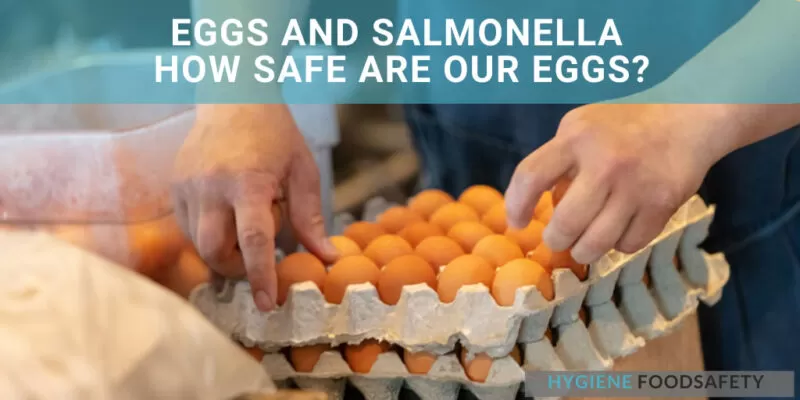
Egg Safety: Why This Essential Protein Requires Better Treatment
Chicken eggs are arguably the least well-treated protein in the modern food industry. While we are meticulous about refrigerating beef or poultry, eggs are the only high-risk protein commonly left out at ambient temperatures in retail stores across many regions. This practice is surprising given that Salmonella is synonymous with chicken and eggs, and remains one of the most common causes of food poisoning globally.
2.0 Understanding Salmonella Enteritidis
Salmonella Enteritidis is the specific species responsible for causing salmonellosis in humans. Biologically, it is a gram-negative, rod-shaped bacterium. In many ways, S. Enteritidis can be considered the “big brother” of E. coli. They are similar because they often follow the same infection routes, primarily the faecal-oral route.
While E. coli is technically tougher—capable of surviving higher temperatures and lower moisture levels—microbiologists often use it as a marker. If E. coli is present, there is a significant likelihood that Salmonella is also present. While Salmonella is most infamous for its presence in eggs, it has also been linked to contaminated chocolate and red meats. However, because E. coli is present in chicken as well as fruits and vegetables, focusing on eradicating the tougher E. coli usually addresses the Salmonella risk simultaneously.
3.0 Why Eggs Need to be Pasteurised
The primary reason eggs are pasteurised is to reduce the risk of food poisoning from Salmonella Enteritidis and the Avian Influenza virus. Because an egg has a protective shell, once it has been pasteurised, it is technically considered free from pathogenic bacteria.
However, the environment where eggs are laid is far from sterile. Hens’ excretion and airborne bacteria are naturally present. If the natural protective coating on the shell is breached, bacteria from the environment can enter the egg via tiny pores in the shell. Furthermore, bacteria can exist inside the egg from the moment of formation if the hen herself is infected. If the pasteurisation process is flawed and the eggs are subsequently left at room temperature, it creates the ideal environment for Salmonella to multiply to dangerous levels.
4.0 Recent Outbreak Data: A Global Concern
The relationship between eggs and illness is well-documented through recent history. In the USA alone, approximately 23,000 cases of Salmonella poisoning occur annually, with an estimated 8,000 cases directly linked to eggs.
- November 2018, South Africa: At least 30 people were hospitalised in Durban after eating meals containing hollandaise sauce made with contaminated eggs.
- September 2018, USA: An Alabama farm recall expanded to five states after dozens were sickened by Salmonella Enteritidis; ten people required hospitalisation.
- June 2018, USA: An outbreak of Salmonella Mbandaka affected 73 people across 31 states, with a 44% hospitalisation rate.
5.0 Guidelines for Preparing Eggs Safely
The illness from Salmonella typically lasts 4 to 7 days, involving diarrhoea, fever, and abdominal cramps. To prevent this in your kitchen, follow these four foundational steps:
- Avoid using eggs that are cracked or visibly dirty.
- Cook eggs until both the whites and the yolks are firm; scrambled eggs should never be runny.
- Avoid consuming uncooked foods that contain raw eggs, such as homemade mayonnaise or eggnog.
- Always refrigerate raw eggs and egg-based products at a consistent 4°C.
When preparing dishes like casseroles or soufflés, the internal temperature should reach 70°C to ensure any latent Salmonella is destroyed. For recipes that traditionally call for raw eggs (like Caesar salad dressing), you must use shell eggs that have been specifically treated via pasteurisation.
6.0 Serving and Transporting Protocols
Proper egg safety does not end once the food is cooked. Cooked egg dishes should be served immediately. If they are being prepared for later use, they must be refrigerated and then thoroughly reheated to 74°C (165°F) before being served.
Never leave cooked egg dishes out of the refrigerator for more than two hours. In warmer climates where the temperature exceeds 32°C, this window shrinks to just one hour. For social gatherings, keep cold egg dishes on ice and replenish small platters frequently rather than leaving a large amount of food at ambient temperature for the duration of the event.
When transporting eggs for picnics or school lunches, use an insulated cooler with frozen gel packs. On a picnic, keep the cooler in the shade and avoid the car boot, which acts as a heat trap. By following these simple but rigorous standards, you can enjoy this versatile protein without the risk of salmonellosis.
Want to learn more about the specific bacteria mentioned today? Read our in-depth profile on Salmonella Enteritidis or check out our guide on Temperature Control in the Kitchen.