
The Chef’s Guide to Temperature Control
Temperature control in the kitchen forms part of the food safety pillars which is critical in ensuring the prevention of bacterial growth and overall quality of foods. For a Chef, temperature is the primary tool for both culinary excellence and pathogen destruction. Within the HFS scientific logic, we view temperature as a binary state: it is either a killing step (heat) or a preservation step (cold).
Temperature control ensures that foods that are meant to be served hot are kept at the required temperature and foods meant to be served cold are not left out at dangerous temperatures. One of the best ways to kill bacteria is by heat. Rapid changes in temperature also prevent bacteria from surviving. So heating foods quickly kills bacteria.
2.0 The Danger Zone: Why 37°C is the Enemy
The Danger Zone is a temperature range in which bacteria grow and multiply at their fastest. This ranges from 20°C to 45°C. Bacteria can, however, grow and survive between 5°C and 65°C. But the most common food-related bacteria grow at their best in the danger zone.
This biological sweet spot exists because our internal body temperature is at 37°C. Food poisoning bacteria are related to us by the food we eat, making 37°C the optimum performance zone for these pathogens. This is true for bacteria such as E. coli and Salmonella. Keeping foods outside this range prevents the rapid exponential growth of these organisms.
Cold temperatures actually only slow or minimise the growth of bacteria. Think about the foods in your fridge. When foods are kept in the fridge for longer than three days, they start to go off. This is caused by food spoilage bacteria and takes a few days to happen in the fridge due to the minimum growth rate. However, when foods are left out at 20°C or above, food spoils a lot quicker.
3.0 Managing Hot Foods and Reheating Logic
All hot foods, but especially those on display at a buffet or servery, must be kept above 65°C at all times. In order to achieve this, hot foods must be kept in a pre-heated hot display that is above this temperature. If you place hot foods in a cool display, it will take too long to get back up to the required temperature, allowing bacteria to survive.
The same is true for placing cooled foods into a hot display. Remember that we need high and quick temperatures to kill bacteria. When it comes to the reheating of food, items should be heated to a temperature of 70°C for at least 10 minutes, or a core temperature of 75°C instantaneously, to ensure all bacteria has been killed. Warmers and Bain Maries cannot be used to reheat foods because they do not rapidly increase the temperature, allowing time for bacteria to grow and survive.
4.0 Cold Chain Discipline and Display Standards
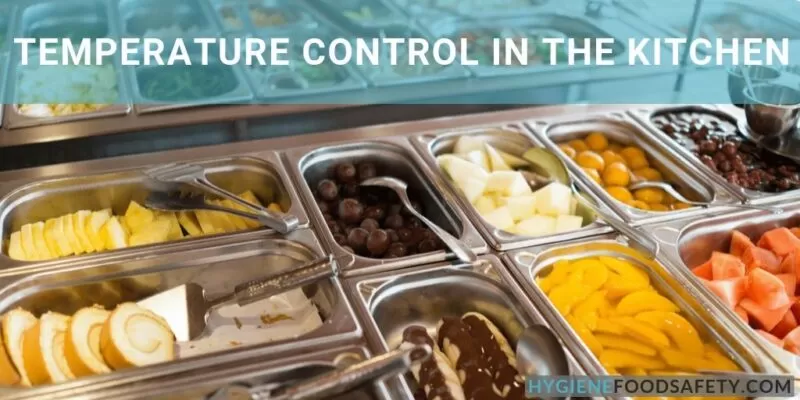
In the case of high-risk cold foods such as prepared salads, deli meats, and dairy, these foods must be displayed below 5°C. Foods such as sliced fruits and juices can be kept below 7°C. This requires that a cold display be used to keep food cold and out of the danger zone.
This also means that these foods should be pre-chilled in a fridge or freezer for at least 30 minutes, and the cold display should be operating below the required temperatures before foods are placed out on display. Cold displays must be either refrigerated or kept on ice. Crushed ice works particularly well as a display that is both appealing and functional for the guest experience.
5.0 Refrigeration Science: Managing Spoilage
All perishable foods need to be refrigerated so that foods do not spoil sooner than the expiry date. Remember that cold temperatures only minimise bacterial growth, but in some cases, bacteria such as Listeria monocytogenes actually thrive at refrigerated ranges.
This is why all five of the food safety pillars are essential in a food safety management system. Nevertheless, high-risk foods need to be kept below 5°C. Frozen foods need to be kept at -12°C or lower for short-term storage, however, colder temperatures down to -20°C will allow you to keep food for up to six months.
Ice cream is unique due to its consistency and must be kept below -18°C. This keeps ice cream solid, preventing crystallisation and minimising layers in the ice cream in which bacteria can survive and thrive during temperature fluctuations.
6.0 HFS Master Control: Temperature Records and Probing
Maintaining refrigeration units is vital to ensuring safety and quality. If it is not being monitored, it is not being managed. Keeping records will allow you to detect ongoing maintenance concerns or whether doors were left open due to negligence. To keep effective records, the brigade should follow these steps:
- List each fridge and freezer in the kitchen and assign them a unique ID.
- Record at least 4 hot and 4 cold foods if you display your foods on a buffet.
- Purchase a hand-held digital probe thermometer (you can review the different types here).
- Place a vial of water or a stick of butter in each fridge or freezer to act as a core-temperature stimulant.
- Use the thermometer to record the core temperature, not just the air temperature.
- Record these temperatures twice daily and at each buffet service.
Summary for the Kitchen Brigade
Temperature control is the most effective way for a Chef to mitigate risk. By understanding the Danger Zone and maintaining a strict schedule of monitoring and recording, you move away from guesswork and into scientific validation. A Chef who masters temperature masters the safety and quality of their kitchen.