
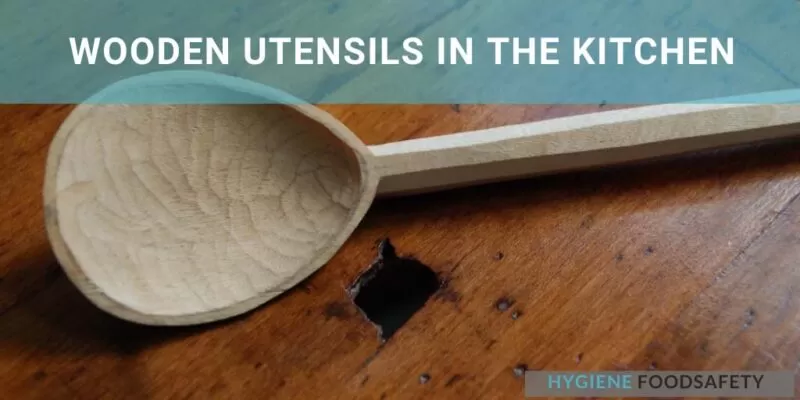
Wooden Utensils in Food Safety: A Comprehensive Review
The use of wooden utensils, surfaces, and equipment has been a long-debated topic in the hygiene and food safety industry. While there are aesthetic motivations for using wood, its practical application in a commercial kitchen requires a deep understanding of biological and physical risks. Traditionally, wood has been favoured for its low heat conduction and the fact that it does not react with acidic foods or scratch delicate cookware.
2.0 Anti-Bacterial Properties of Wood
It is a common misconception that the natural “anti-bacterial properties” of certain woods will actively kill pathogens. While some hardwoods do not support the rapid growth of bacteria in the same way that a nutrient-rich agar might, they cannot be used to sanitise a surface. Much like a sliced lemon, which is acidic, wood can still harbour and protect bacteria once exposed to the kitchen environment. You cannot use wood to kill bacteria; it is not a substitute for a chemical sanitiser.
3.0 Porosity and Water Absorption
The defining factor in the “wood vs plastic” debate is porosity. Wood is naturally porous, meaning it absorbs water. In the world of food safety, non-porous materials are preferred because they allow for effective cleaning and disinfection. When wood absorbs water, it creates an internal reservoir that supports bacterial survival. Furthermore, wood tends to retain flavours and odours from previous food batches, leading to quality concerns.
4.0 Biofilms and Cross-Contamination
Research has shown that bacteria can grow within the wooden material, forming what is known as a biofilm—a colony of bacteria that survives and flourishes in the grain. While these bacteria often stay “trapped” within the wood and do not easily transfer to food, the risk changes when the tool becomes damaged. When the surface peels or cracks, it can release built-up reservoirs of Listeria monocytogenes or Salmonella into the food you are preparing.
Always inspect wooden spoons and boards for splinters. Wood degradation is a major physical contamination concern. A splinter stuck in a consumer’s throat is a medical emergency that can be avoided by simply discarding any wooden equipment that feels “fuzzy” or shows visible cracks. If it’s not smooth, it’s not safe.
5.0 Why HFS Generally Discourages Wood
Although wood can be used safely in low-risk areas (such as for serving boards), we generally do not recommend it for high-care kitchen environments for several reasons:
- Wooden equipment must be kept perfectly dry to stay in good condition, which is rarely possible in a busy kitchen.
- Oils used to protect wood are often not food-safe.
- Damaged areas harbour mould and bacteria that are impossible to reach with standard sanitisers.
6.0 HFS Maintenance Protocols
If you choose to use wooden utensils, you must follow these rigorous maintenance steps:
- Hand Wash Only: Use hot water and a mild detergent, followed by a sanitiser spray. Allow it to dry completely before storage.
- Avoid the Dishwasher: High temperatures and long cycles dry out the wood, causing it to split prematurely.
- Conditioning: Periodically rub the items with food-grade mineral oil or beeswax. Avoid vegetable oils as they can go rancid.
- Sanding: Stains or minor roughness can be removed with fine sandpaper, provided the item is cleaned and re-oiled afterwards.
- Discard Rules: If a tool splits or cracks, discard it immediately. The deep crevices are a breeding ground for bacteria.
Ultimately, whether you use wood or plastic, the only way to ensure safety is by following the correct cleaning and sanitising procedures.
For more information on the foundation of kitchen hygiene, check our book on Food Safety for the Kitchen.