
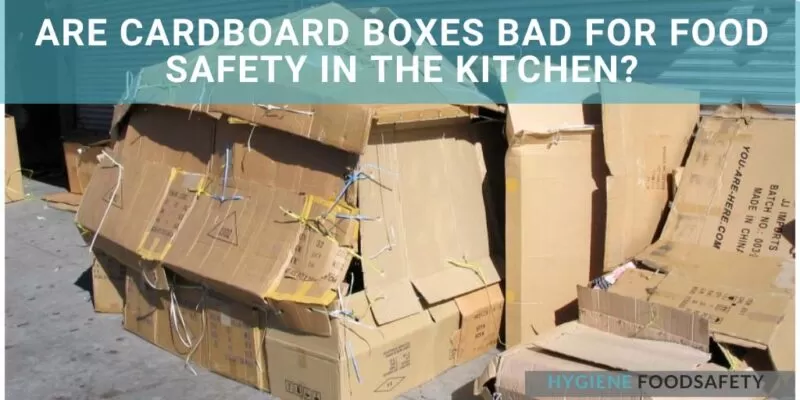
Cardboard Boxes in Food Safety: Risks and Decanting Protocols
Cardboard boxes in food safety are inescapable when it comes to the manufacturing and transport of food products. It is a cost-effective way of transporting goods and offers obvious benefits in terms of recyclability. However, as a rule, corrugated cardboard boxes are not safe for usage or storage within a professional kitchen environment.
2.0 Why Cardboard is a Risk Factor
When a kitchen accepts delivery, it takes on the cumulative risk of the entire supply chain. Cardboard packaging, by its nature, is not stored as safely as the food it contains. These boxes often come into contact with dirty vehicle floors, loading docks, and external environments where food would never be considered safe.
The visible appearance of a box is not a true indicator of cleanliness. Pathogens such as Salmonella or Escherichia coli can survive on surface fibres, especially if the cardboard becomes damp. Wet cardboard encourages the growth of bacteria rather than reducing the risk of cross-contamination.
3.0 The Corrugated Pest Threat
The most significant physical risk associated with cardboard is pest infestation. Cockroaches and other pests are known to lay eggs within the corrugated channels (the wavy spaces between the boards used for insulation).
These egg casings are often invisible to the naked eye during a quick delivery check. By bringing these boxes directly into your dry store or walk-in fridge, you may be introducing a pest infestation that can quickly spread throughout the facility.
To maintain HFS standards, implement a strict “decanting” policy at the point of entry. All products arriving in corrugated cardboard should be removed from their external boxes in a dedicated receiving area. Transfer the items into clean, food-grade plastic bins or lidded containers before they enter the main kitchen or storage zones. This keeps the “street dirt” and pests outside where they belong.
4.0 Single-Layered Boards vs Corrugated Cardboard
Single-layered boards do not have the internal gaps that allow for pest nesting and are generally accepted as a lower risk. However, they are still porous and susceptible to moisture damage. If a single-layered box becomes wet, it can support the growth of Listeria monocytogenes, which thrives in cool, damp environments.
While these boards may be used for delicate items like mushrooms, their use should be kept to an absolute minimum. Always inspect for structural integrity, as damaged boards expose the food inside to environmental contaminants.
5.0 Solutions and Practical Alternatives
Eliminating cardboard upon receipt is the gold standard for kitchen hygiene. Consider these solutions:
- Plastic Sealable Containers: Transfer dry goods and produce into washable, reusable bins that prevent damage and cross-contamination.
- Alternative Packaging: Source suppliers who use foam or plastic crates for items that bruise easily, as these can be sanitised.
- Minimal Usage: Only allow cardboard in the kitchen if it is a single-layered specialist box and is kept in a designated area away from ready-to-eat foods.
6.0 Managing Frozen Product Packaging
For frozen products, cardboard boxes are often unavoidable because the products are frequently frozen into the shape of the box, making them impossible to remove without thawing.
In these circumstances, the box is acceptable only while the product remains frozen. Once you are ready to thaw the item, remove it from the cardboard immediately if possible. If the box must enter the fridge for a controlled thaw, store it on the lowest shelf in a dedicated area to prevent any “box dust” or moisture from contaminating other items.
By managing cardboard boxes in food safety with a “decant-on-arrival” mindset, you significantly reduce the risk of biological and physical contamination. For further details on storage best practices, refer to our article on How to Store Foods Safely.